The Origin Story - Crazy Beautiful Truth
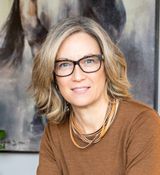
The first episode of Crazy Beautiful Truth with Sheila Delaney. The Origin Story.
Loving ourselves back to life in all the places we live, gather and work.
We have all had dark days, even seasons, that take time to bounce back from. They leave us forever changed. The disorientation is real and it takes time and experience for most of us to accept the larger truth that nothing stays the same.
The bad days pass. The wounds heal, in their way. And the best days are a gift we can’t hold onto.
Reorienting to a new world after a major transition, loss, change, or even a new discovery about ourselves that shakes us up, is - to varying degrees - not for the faint of heart. I decided sometime in the past decade, when I was feeling lost and lonely, to remember there is always a Crazy Beautiful Truth at play. Something bigger than me, wiser than me, but inclusive of me. I have a say, and if I have a say there must be a way through, even if I haven’t seen it yet. I have a say, but also it circumstances are not entirely up to me. Truth is dynamic. It is messy, freeing, full of wonder, not polished nor tidy, but rife with complexity, internal conflict and paradox. I'm here for it.
This episode sets the stage for why this idea of Crazy Beautiful Truth was so important to my healing and my growth. It sets the stage for the conversations to come.
I want for you to feel alive in your life. Vital. Connected. Empowered. Creative. Joyful. I want this for me, for my daughters, for my relationships. I want for our communities to be vibrant and connected and empowered. I want for our organizations and teams to be vehicles for good and positive impact. Crazy Beautiful Truth is my contribution to this vision.
May it be of service.
The transcript for this first episode is below. Or you can enjoy the episode on Spotify.
Lets bring more delight to this crazy beautiful life. Join me.
The Transcript
Hey there. Welcome to Crazy Beautiful Truth. There are great conversations to come, but for this one, episode one, I thought we could get to know each other a little. So I'll introduce myself here, give a little bit of my story, give you an idea of what's to come. And I'd love to know more about you in the comments, so stay tuned for the ask.
I don't know how you landed here, but I do know this: you are not here by accident. There's a reason this came up for you and came up now.
Maybe you're feeling a little disconnected from yourself. Maybe you're exhausted from proving, pushing, or just holding everything together. Maybe you're wondering what's next as you're looking at an impending transition or change. If any of that sounds familiar, you're in the right place.
If you were part of the Clubhouse room that I hosted by this same name, thanks especially for being here. I'm Sheila Delaney, and this is a passion project if ever I had one. I'm probably compensating for the PhD I thought I'd have done by now. But I love a rich conversation that gets at really big questions with people who have found their own way. Now I get to share them with you. They're juicy, and I know they're of service.
As for me, I know I spent years chasing worthiness and belonging the way that I thought I was supposed to—hustling, proving, pushing, even serving, volunteering, and leading—until my body got pushy right back.
I learned the hard way that ignoring ourselves—our needs, desires, inner knowing—comes at a cost, and that cost is high. Chasing the acceptance of others is fruitless, and I lost a lot of time in the doing of this. But it was no waste, because here's what I know, beyond a shadow of a doubt: we can come home to ourselves with real wisdom and real experience gained while we were out in the wilds chasing things that we weren't sure we wanted.
There's no such thing as too late. No such thing as too far afield to come home. We can realign with who we are, who we want to be, and connect to a whole new source of courage, creativity, vitality, and peace.
This is what I want for you. I want you to feel alive. So if you're at a crossroads, or wandering in the wilderness, wondering what's next, you are in the right place.
So let's talk about it. I'm going to rewind a little bit and tell you a little bit more about me.
So, who am I?
I am a half Korean, half Irish Canadian living in the States. I'm a former attorney turned executive and leadership coach and facilitator of group and team experiences. I spent a decade working with teams and leaders dealing with crises and intense situations. Those are the times that we are confronted with ourselves, our priorities, what we're left with when we brush everything else off.
I am a white-passing woman, but I spent a lot of childhood time with my Korean grandmother—my mom's mom. My little brother and I were often at her house or at the Korean church, where we were the only ones who didn't speak the language.
And I tell you, where kids don't speak the language, the stage is set for growing kids who are students of human behavior, who learn to read a room without the distraction of words, of what people are pretending to communicate about. It's how he and I learned what was expected of us. It's how I learned what was expected of me.
My grandmother's modeling taught me that I should feed my neighbor, even if I starve myself if it comes to it. And that's a beautiful thing in so many ways, but it's also chilling, taken too far.
For most of my life, I believed that my intellect was the secret to my belonging. I was taught that being smart would open doors, and there was no higher purpose than creating opportunities and keeping doors open.
I was a natural writer from a very young age, and I took it seriously. I could read approval and disapproval in the eyes of adults from a mile away. When I was 11, I knew my writing impressed adults. I also learned at this point that I was stubborn and I was a perfectionist.
My teacher, Mrs. Craig, had to call my parents in because I was refusing to hand in an essay that she knew that I had worked really, really hard on. Now, for those of you who don't know, that was back in the day when essays were handwritten—pen and ink, by hand, on lined paper, in cursive.
She knew I'd finished this essay, but I absolutely refused to hand it in because I was not happy with it. She tried to talk to me about it. She called in my parents to talk to me about it. They all sat me down and said, "You have to hand this in, or you know you're going to get a zero, right?" And I said, "Yeah. No, I get it. I'll take the zero."
You can imagine the exasperation of my parents. I'm a mom now. My daughters are young women, but I can only imagine. I never did hand in that damn paper. A grade meant nothing to me relative to the disapproval I imagined if they read this substandard product that I had written.
So I spent the next four, five years deconstructing whatever that was. And by the time I got to high school, I was pretty much over it. I knew that I had some writing talent, and I knew I could start something really late in the process, frankly, and do just fine.
That is, until grade 12, my senior year. My social studies—who was our principal—failed me on a paper, and I was thoroughly insulted. It was the late '80s, and I went to him with my indignation. I advised him this didn't make any sense, and that surely mine was in the better half of essays in the class.
He looked me square in the eye and asked me when I started it. I didn't see the relevance of the question, and I pushed back again about how mine had to be one of the better ones in the class—certainly not amongst the worst and certainly not fail-worthy.
He affirmed, "This was so. Yeah, it is. When did you start it?"
I ducked and I dodged, and he just stood there watching me squirm. I finally admitted I started it just a few days before it was due. So he challenged me to see what was possible if I took the full time and actually applied myself and did my best work.
Mr. Gardner—shout out to him—told me he would accept the essay again. He would regrade it and split the grade if I took the whole of a week. And I had to take the whole week with regular check-ins with him.
He's one of those teachers that blew my mind and influenced me in such a way that my kids know his name, and they know this story. They knew it early. He taught me that smarts and talent only go so far. I had to actually do the work. So, work I did.
I ended up doing an undergraduate degree in business, worked at a bank, then did my JD, and was hired into the law firm I most wanted to join. I became the lawyer. I ticked the boxes. I did the thing.
But life threw me a curveball, as life is wont to do. I missed the two-by-four in law school. A brain bleed put me in the hospital for over a week under close observation. I heard daily, "We're going to do brain surgery tomorrow." And then I'd wake up the next day and they'd say, "Maybe you're okay." And then we'd go to bed that night, and I'd hear, "We're probably going to do brain surgery tomorrow."
But I never did need it. I still have this wee tumor in my brain that bled out and sits there doing nothing of interest. They took pictures of it annually for years. And now we pretty much ignore it.
As an articling student—which is the thing we do in Canada where we practice law under someone else's insurance and supervision for a year before we're eligible to be called to the bar—under those circumstances, I worked 80 to 100 hour weeks. And I loved it.
I was working with smart people. I was doing cool work and honestly feeling very self-important, if I may say. I was young and I was hungry. I was as good as I wanted to be and I had some cool opportunities.
And then I was hit with pneumonia that knocked me flat on my back for weeks. This was the second two-by-four. Both times I got the same message: slow down. But I didn’t. Because who was I if I was not accomplishing, pushing, proving? To whom—I don’t know.
I kept on keeping on, even as I found a new career path, moving to the States with my then husband. Perfect! Here's the continuation of your word-for-word transcript, properly formatted with paragraphs, capitalization, and punctuation, picking up right where we left off:
Fast forward 10 years. I was a self-employed mom of two little girls, was president of the Parents Guild at my daughter's dance school. I was the art docent in my other daughter's class at school. I was on the leadership team for a Mothers of Preschoolers chapter, and I was suddenly slapped with chronic acute nerve pain that lasted a year and a half, followed by another year and a half of spontaneous paralysis in my right arm, from shoulder to fingertip.
I had to step down at that time from every volunteer service and leadership position that I was in. I just couldn't do it. There was no way that I could serve and navigate this pain and the healing that was required.
My first feeling was not guilt. It was not panic. It was relief. And that scared the hell out of me.
After that, I was mortified. I'd met my limits and I did not like it. Real people were affected. It's all fine and well to talk about boundaries and putting ourselves first and talking about self-care when we have to do things like this, but in a situation like this, other people have to step up. It's real. Someone else had to do a job that I had committed to. Someone else had to scramble, and I hated it.
I was fortunate during this three-year period to be surrounded by irreverent and loving friends who kept it light and both supported and made fun of me in equal measure. “Pass the water, Sheila. Oh wait, never mind,” as I sat there with a paralyzed arm in a sling. And on it went.
But somewhere along the way, I began to ask different questions. What was it about the way I was designing my life that I could want the salt on the table, but I could not reach for it? That I could not reach for that which I desired?
It's a big question. And so began a journey of an entirely different sort.
I found my way into healing: therapy, acupuncture, energy medicine, even deep spiritual deconstruction and exploration. I stopped looking outside of myself for validation and started wondering what was actually true for me. And that wondering—it changed everything.
I healed from that situation eventually and was diagnosed with a degenerative autoimmune disease that I would live with going forward. I had a rheumatologist who tried all the things and then declared me his “problem child.” At that point, he told me, “Stop all the meds, and talk to me about your relationships, your stress, and the food that you're putting in your body.”
This man was well ahead of his time. He got me into therapy. We completely reshaped my nutrition. But the moment that was most pivotal came when I spoke to my therapist about my autoimmune disease.
He asked me straight up, “When did you get confused about who the enemy was and decide to do battle with yourself?”
I remember bursting into tears, and I remember it was bone-chilling being asked that. He pointed to the structure of the words and the label: autoimmune disease. All of my immune-fighting resources were turned inward at myself.
We will be talking about this at length at some point—and the fact that 80% of autoimmune sufferers are women, and why. What we have in common. There's so much there.
But at that time, I started paying attention to what my body, my spirit, and my intuition were telling me. And guess what? Go figure. They were not saying, “Keep pushing.” They were saying, “Come back. Come back to us.”
I began the baby steps of leaning into something truly terrifying—trusting myself.
This led me into mystical realms and spiritual exploration. I read, I tried, I learned, studied, got certified in all the things. I deconstructed and reclaimed a spiritual centeredness that honored the best and truest of all that I'd been taught in a way that left lots of space for possibility and for wonder.
I decided my own intelligence could be put to work for me. I began wondering about the wisdom in letting myself ask the strange questions that came up for me—instead of thinking, “Well, that’s ridiculous. Why would I even wonder about that?”
What if wonder was, in fact, my best medicine?
And that exploration has led me here—to the work I do now: helping leaders and high-achieving humans reconnect with themselves, the best of themselves, to take responsibility for their influence, their power, their agency, to grow their self-trust and their ability to be kind and friendly with all of the parts of themselves.
And today, beginning now, I bring these conversations to this podcast. I bring these to you.
So why Crazy Beautiful Truth?
Because the truth is messy, and freeing, and full of wonder. The truthiest truths are not polished or tidy. They're rife with complexity, and even internal conflict and paradox.
How is it that I stood at my dad's graveside when I was 19 years old, wracked with grief, and simultaneously awestruck at the beauty of the view from the cemetery he chose to be laid in? How was it I could be so full of sorrow, and so wicked grateful that he was my dad?
It was never just one thing. It was all true at once.
When we face these untamed truths, they have the power to set us free. And I’m here for it.
And here's a big truth. We live in a world that glorifies overwork, perfectionism, and self-sacrifice. But our greatest impact and our deepest joy does not come from proving ourselves to others and the disembodied random standards and expectations of the world.
These things come when we are aligned with who we really are. We are messy, brilliant, scared, brave, imperfect. We are human.
This is the work that led me to being symptom-free in my autoimmune disease journey for the last five years. This is the work that helps us heal—not just our bodies, but our spirits. And this is the wonder-filled work that I want to explore with you.
So part of this work is reclaiming our stories. Ten to one, you don't even know all your stories—the ones that shaped you and your beliefs and set you up to be who you are. We can't know them all. We just absorb them.
So here's a fun fact: between the ages of two and seven, our dominant brain waves are theta waves. As adults, theta waves are where we experience deep sleep, REM sleep, and are the waves of hypnosis.
Whatever we heard or learned about ourselves between the ages of two and seven dropped straight into our programming.
This podcast is here to wonder about that—and truth in all its forms.
We'll talk about the power of slowing down and listening in. How to navigate big transitions with grace. We're going to talk about what it means to lead from wholeness and wisdom, rather than urgency and depletion. And we're going to talk about this messy, beautiful journey of reclaiming ourselves, especially at midlife.
So if you have ever felt like you've lost yourself in the grind… if you're wondering what's next, now that the life you built is beginning to shift and feel less satisfying… this is for you.
So here's what to expect: each week, a new episode is going to drop, and we're going to dive into some real conversations. Sometimes solo—it’ll just be me. Sometimes with incredible guests. I’ll share stories, insights, and practical tools that help you reclaim your vitality, creativity, and joy.
Some of these conversations are going to hit you in the gut. And some won’t. That’s okay. Take what serves. Leave the rest.
I don't have all the answers. But I do believe in the power of asking the right questions.
We're going to laugh. We're going to get real. We'll even cry a little—if we're doing it right. And we're going to hold space for this fullness of being human, you and I.
Here’s my invitation to you: if something in this episode—this beginning, this leaping-off point—speaks to you, please share it with a friend. Invite them in. Subscribe and follow so that you do not miss what's coming.
And if you're feeling bold, would you leave me a comment? Tell me what crazy beautiful truth is alive for you right now. Something unexpected. Something that surprised you.
And let me just let you know: you are not alone on this road.
Thank you for spending this time with me. Come back, okay?
Good things are happening here. And I want you to be a part of it.
Let’s do this. Together.
Keywords
self-discovery, healing, personal growth, autoimmune disease, leadership, spirituality, mental health, creativity, life transitions, authenticity